24 October 2026
We built a brooder
The first plan was fairly modest: bring home a small batch of Quamby chicks and see how they went. Quambys are a heritage breed that should give us both good layers and useful meat birds, and they breed true, so a hen and a rooster from the flock make more of the same.
Then there was a second trip.
Before that trip, Nat and Marion explained the longer plan to the breeder. We want to eventually breed our own replacement layers for our chicken caravan, keep the hens we need, and eat the roosters.
Apparently that was exactly the answer he wanted to hear. He got very excited that the roosters would have a purpose too, and according to Nat, birds started being tossed into the box from all directions.
So Nat and Marion came home with rather more birds than anyone had planned for.

We have learned something important from this experiment already: be careful letting Nat and Marion go chicken shopping together. Although, in their defence, the breeder may have been an accomplice.
Fortunately, the brooder was nearly ready. The box itself is half an old water tank. The run off the front of it is half a temporary carport. Neither was ever meant to become a brooder.
Reusing them sounded straightforward. It wasn’t. Materials designed for completely different jobs bring their own collection of awkward shapes, odd joins and questions nobody puts in a brooder-building guide.
It has character now.
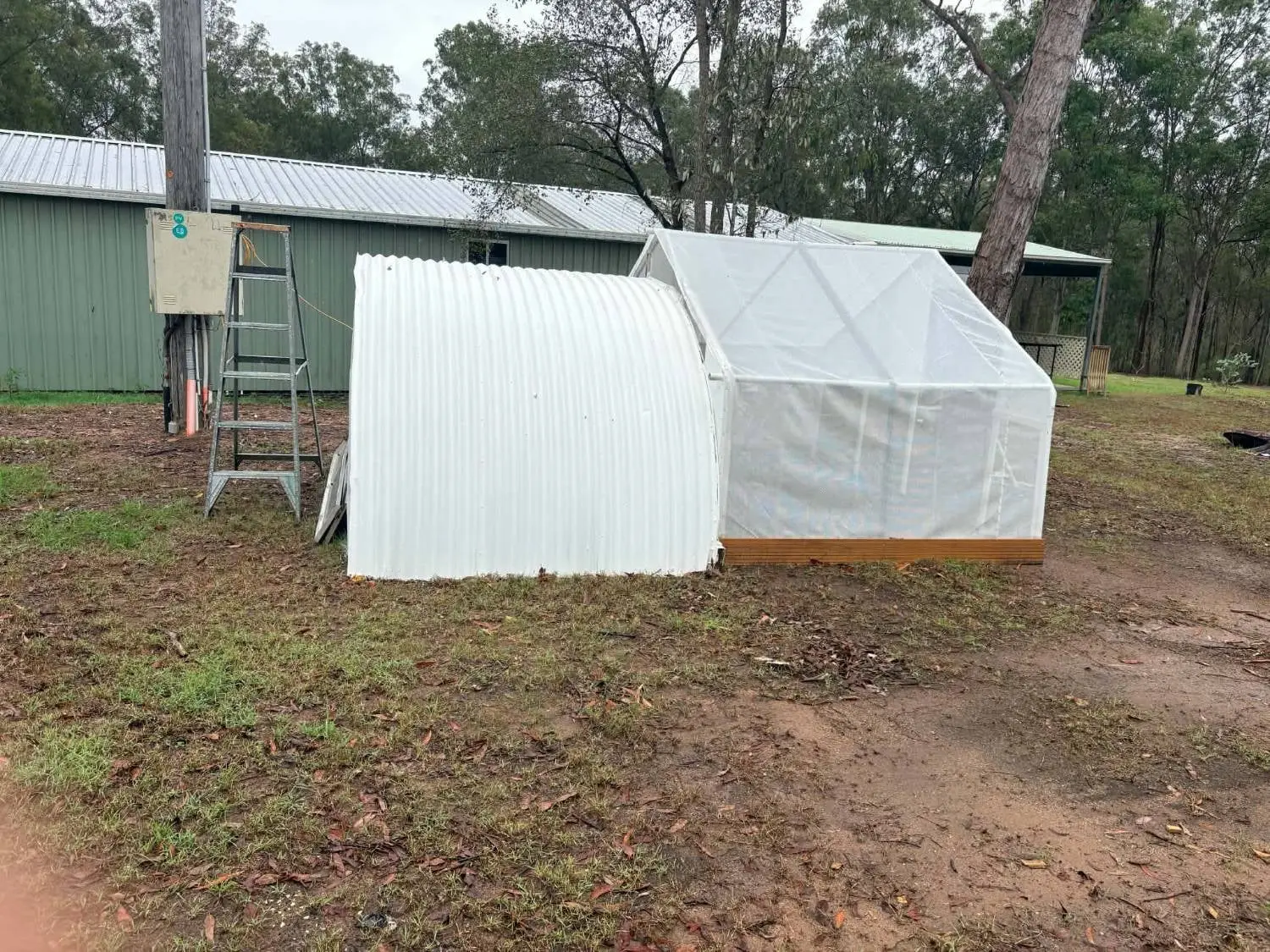
The finished box has two separate sides, each able to run at a different temperature. That’s important because a day-old chick and a bird several weeks older don’t need the same amount of heat. Instead of trying to make one space suit everyone, we can move birds through as they grow.
Each side has its own thermostat, with four heat sources across the brooder. That gives us some redundancy too. A failed heat source shouldn’t immediately mean a cold box full of chicks.
We’ve tried to apply the same thinking to the rest of it. The feeders are deliberately large enough that, depending on the age of the birds, we should only need to fill them about twice a week. The point isn’t to avoid looking at the chicks — we’ll still do that every day — but to stop a small enterprise creating a list of little jobs that quietly takes over the week.
That matters to us. We’d like raising birds to become a small income stream for the farm, but only if the work stays sensible. Something can make money on paper and still be a poor fit if it needs someone constantly carrying feed, topping up water or adjusting equipment. So the brooder is designed around removing as much of that routine work as we reasonably can.
For the warmer months, the older chicks also have the run. Part of that is simply space, but part of it is letting them learn to manage themselves. They can move between sun and shade, warmth and cooler ground, instead of having us try to create the perfect temperature everywhere for them.
Our current plan is to raise chicks through the warmer part of the year, roughly September through April. If the thermostats and heat setup can hold steady enough temperatures through winter, we may find that season can stretch further. We haven’t proved that yet.
That’s really what this whole Quamby experiment is at the moment: build something practical, try it at a manageable scale, watch what happens, and see whether the birds — and the workload — make sense for Wattle Farm.
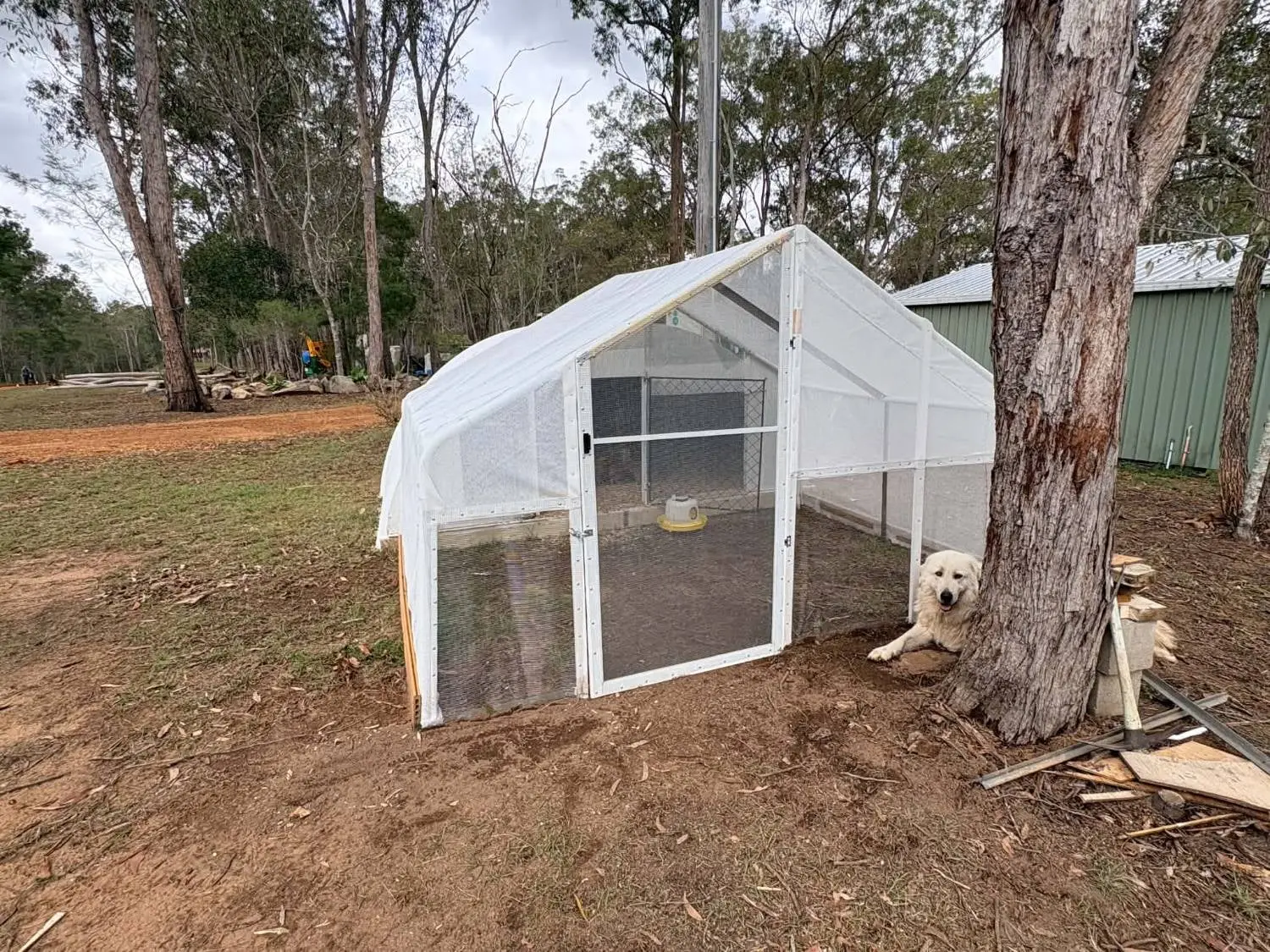
The brooder is finished.
The shopping controls — breeder included — may still need some work.